
Select the decision surface.
Concept review, design QA, site judgement or another workflow where senior reasoning materially changes the outcome.
OUTPUT / first bounded use caseThe taste and judgement layer for creative teams.
DREAMVISION turns a practice’s project history and senior judgement into private operational intelligence, pluggable into the tools, workflows and agents the team already uses.
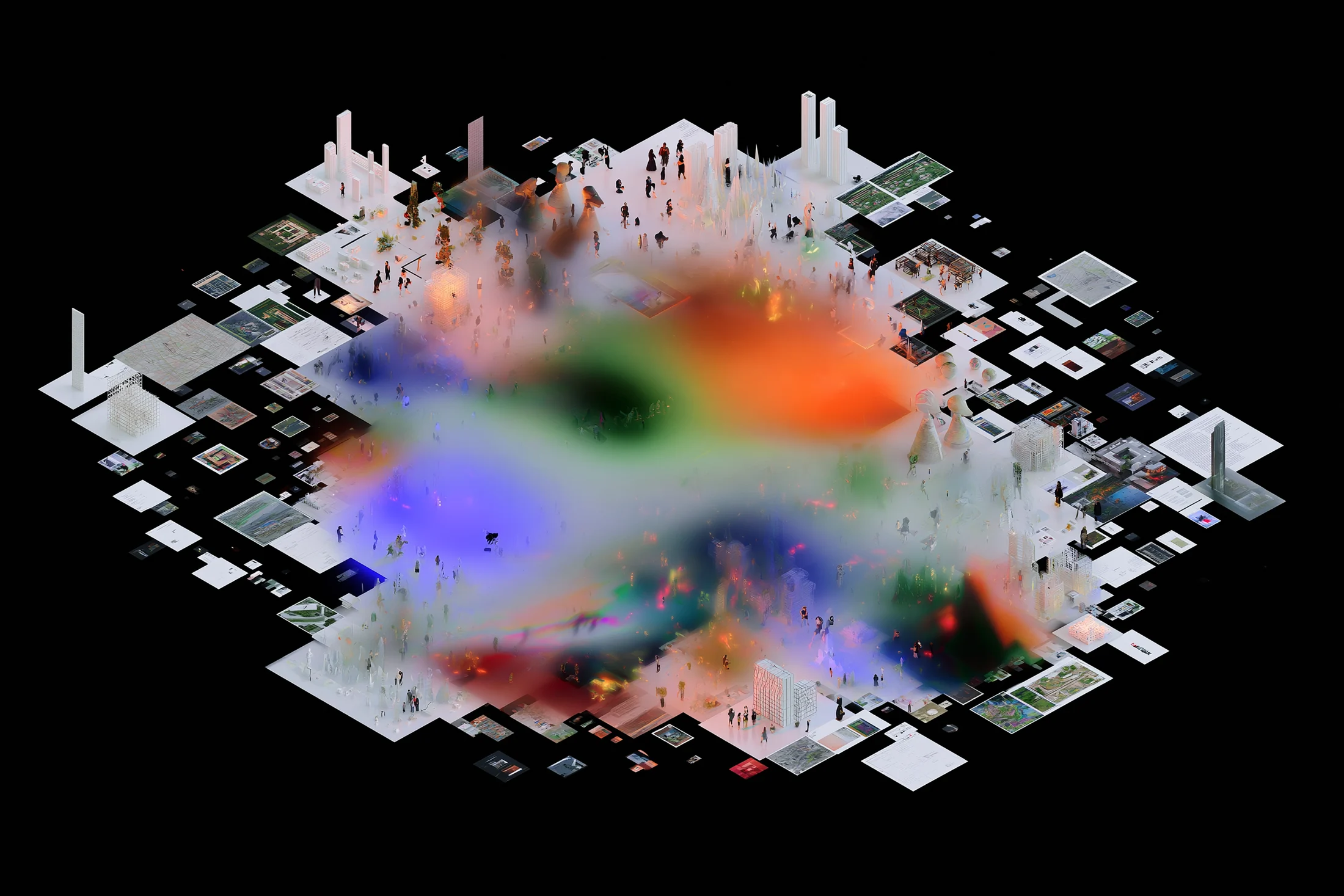
Studios have more models, more data and more automation than ever. The hard part still lives in the quiet decisions: what belongs, what is weak, what to preserve, what to remove, and when to escalate. Perception, quality control and critical thinking.
Generative tools multiplied everything but they never replaced taste, instinct, and critical thinking.
DREAMVISION does not train a generic model on a studio archive. We convert authorised material into evidence objects, relate them through a domain ontology, then validate which relationships become institutional judgement.

A Lead Genome is not a style fingerprint. It captures a named senior’s validated reasoning pattern: what they notice, which precedent they recall, how they evaluate a trade-off, what they reject, and how they direct the next move.
Each column is a real reasoning episode. The Genome is the versioned pattern across them, never a single inferred preference.
Ambient by default. Queryable on demand. Plugged into your software. DREAMVISION can evaluate work quietly inside the studio’s existing CAD, BIM, modelling, review or agent workflow, surfacing direction only when it adds value.
The team does not have to leave its existing environment to use DREAMVISION.

Evaluate quietly in the background. Surface only meaningful conflict, drift or opportunity.
Let a person interrogate the House or an authorised Lead Genome when deeper reasoning is useful.
Internal agents and software can request judgement themselves, through the Genome API.
DREAMVISION is most valuable where expertise is concentrated, archives are deep, and AI transformation is creating more output than the organisation can reliably judge.

Keep house judgement coherent as teams, tools and project types scale.
Preserve how experienced people evaluate and solve problems before transition or retirement.
Connect project precedent, reviews, references and decision history across silos.
Make AI useful inside the existing stack without introducing another disconnected workflow.
The first deployment is intentionally bounded: one decision surface, a selected evidence set and named senior validators. The goal of our Forward Deployed Engineers implementation is to accurately build and prove how the studio’s own judgement can be made operational. The governed intelligence layer expands from there.
Concept review, design QA, site judgement or another workflow where senior reasoning materially changes the outcome.
OUTPUT / first bounded use caseAuthorised evidence is normalised, related through the DREAMVISION ontology and reviewed with senior validators.
OUTPUT / governed institutional baselineCapture how selected senior people evaluate, refuse, direct and escalate through repeated validated reasoning episodes.
OUTPUT / person-specific judgement profilesRelease the governed runtime through in-tool surfaces, API calls or secure review environments.
OUTPUT / first operational proofAdd project families, senior Genomes, teams and workflows as the intelligence layer earns broader use.
OUTPUT / expanding studio intelligenceOur creator-level research studies how references, refusals, decisions and quiet judgement can become legible without collapsing a person or practice into a style clone.
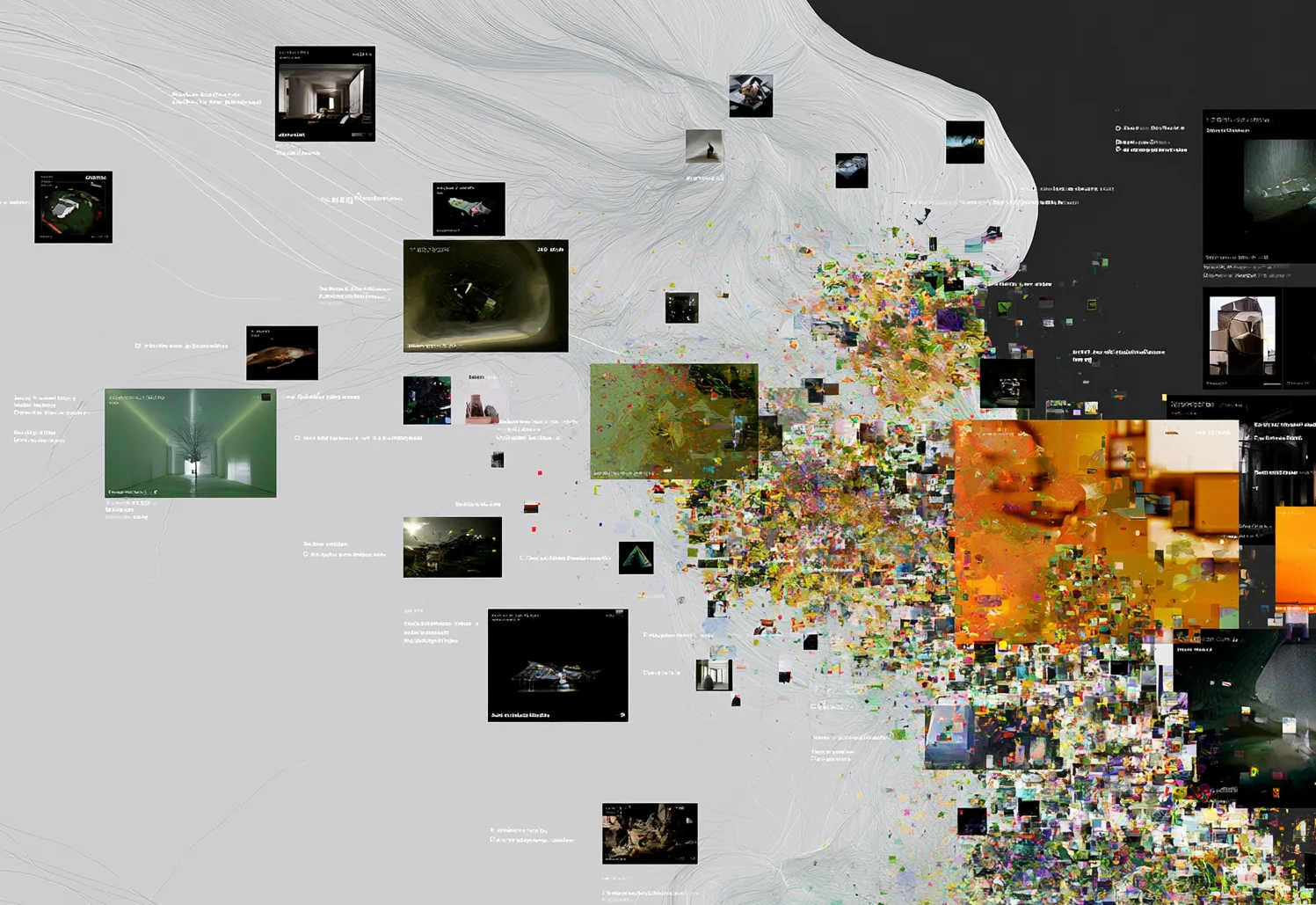
Individual files are only evidence. The deeper signal appears in repeated relationships: which references precede a decision, what gets refused, when a threshold changes, and whose judgement carries authority.

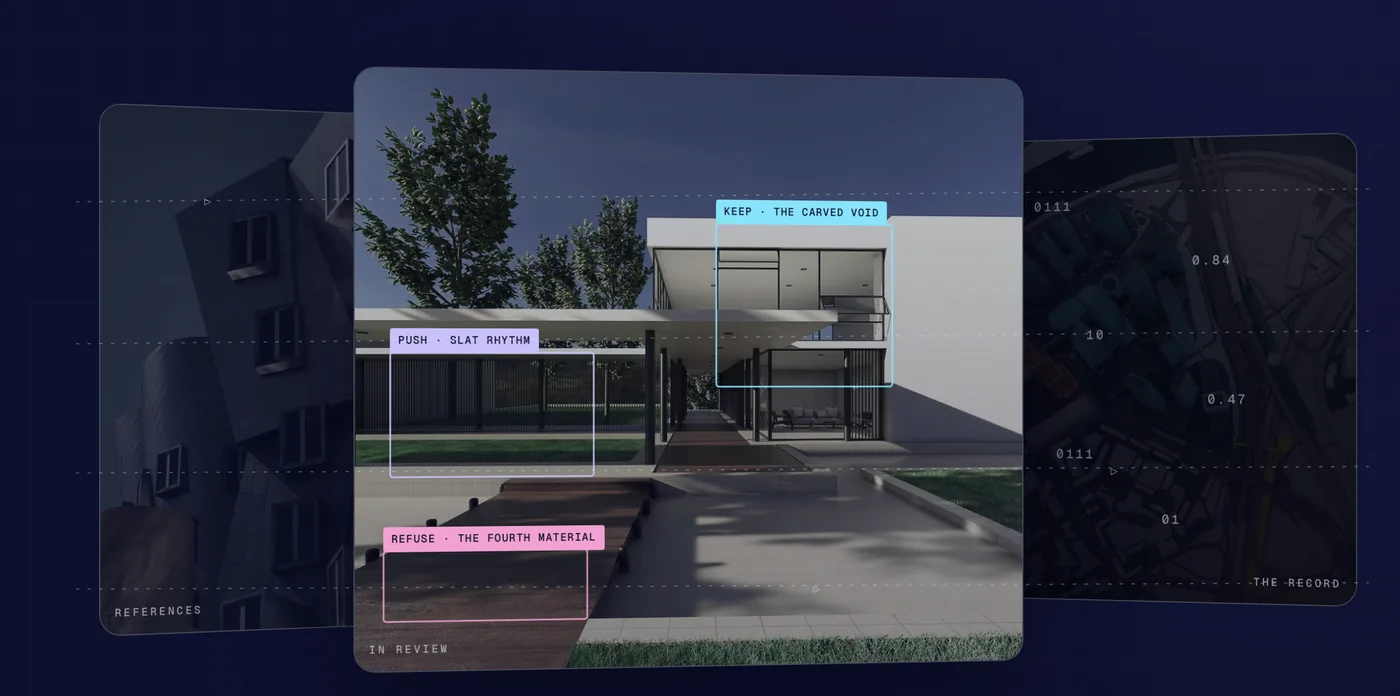
The taste and judgement layer for creative organisations.
Book a private briefing ↗